

Antastic Tom
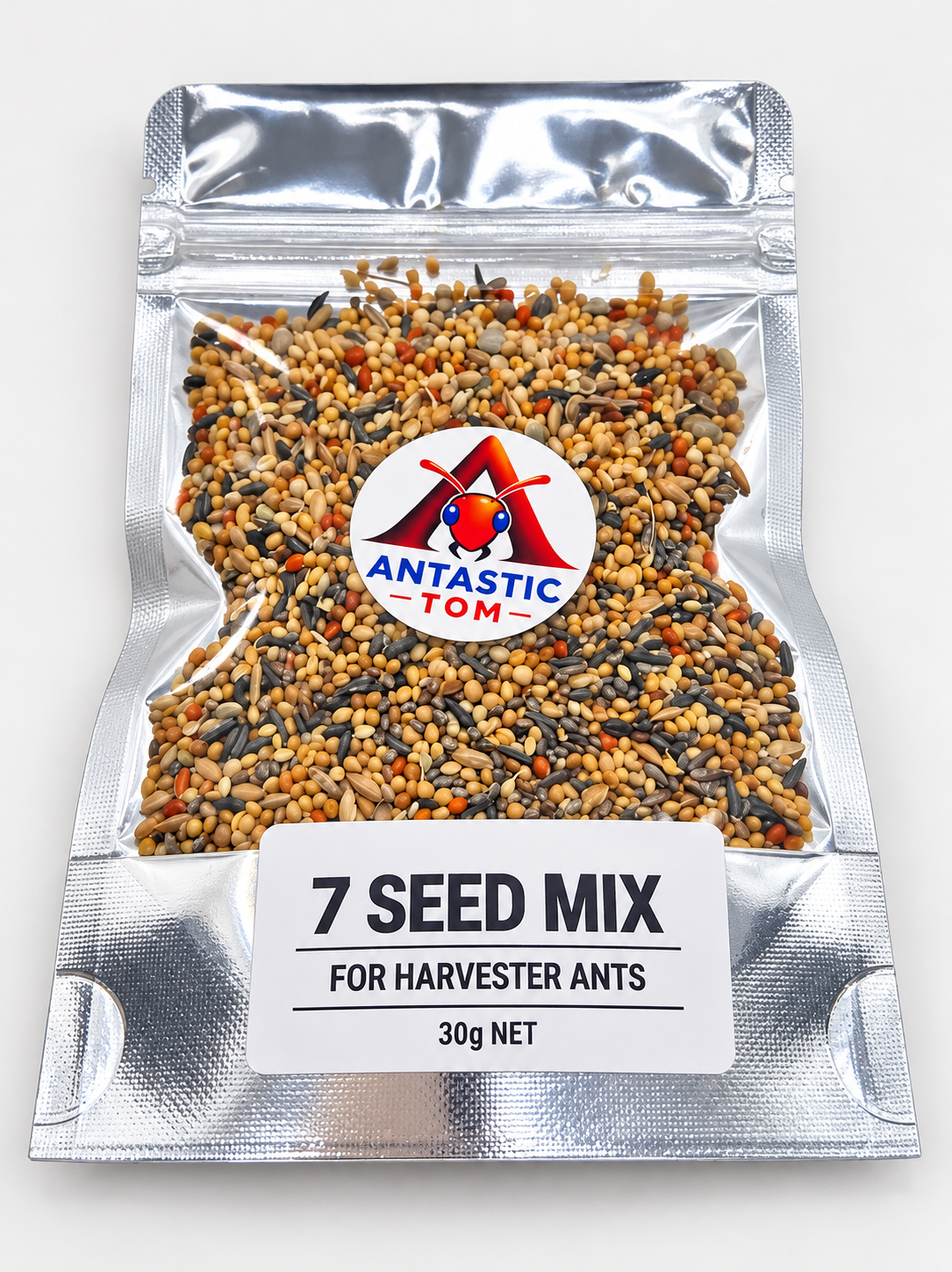
Harvester Ant Seed Mix – 7 Seed Blend (30g)
Harvester Ant Seed Mix – 7 Seed Blend (30g)
10 in stock
Couldn't load pickup availability
A varied seed mix for Messor barbarus and other seed-eating harvester ants.
Our 7-seed blend has been developed with a focus on smaller seeds, making it particularly suitable for young colonies with their first workers while still offering variety for growing and established colonies.
Mixed and packed in the UK by Antastic Tom.
- 7 different seed varieties
- Small-seed focused for young colonies
- Suitable for Messor barbarus and other seed-eating ants
- 30g resealable pouch
What's in Our Harvester Ant Seed Mix?
Our 7-seed blend combines a variety of seed sizes and types, with an emphasis on smaller seeds suitable for young Messor barbarus colonies.
Ingredients
Canary seed, white millet, red millet, panicum millet, chia seed, niger seed and hemp seed.
Why these seeds?
Rather than simply including as many different seeds as possible, we've focused on creating a practical mixture that offers variety without relying heavily on larger seeds.
Smaller seeds are particularly useful for young harvester ant colonies, where the first workers may struggle to handle or process larger varieties. As the colony grows, the mixture continues to offer a choice of different seed types.
Suitable for Young and Established Harvester Ant Colonies
Whether your Messor barbarus colony has just welcomed its first workers or has grown into an established colony, our 7-seed blend provides a selection of different seed sizes.
Young colonies and first workers
The emphasis on smaller seeds makes the blend particularly practical for colonies with only a handful of workers. Offer small quantities and monitor which seeds they collect.
Growing colonies
As worker numbers increase, colonies can collect and process a wider selection of seeds. The mixture gives them several varieties to choose from.
Established colonies
Larger colonies can continue using the blend as part of their regular feeding routine, with quantities adjusted to the colony's consumption and existing seed stores.
How to Feed Harvester Ants
Feeding Messor barbarus and other seed-eating harvester ants is straightforward. Offer a small selection of seeds in the outworld and allow the workers to collect and store what they need.
- Start with a small amount: For young colonies, offer a small pinch of seeds in a clean feeding dish or designated feeding area. You can increase the quantity as the colony grows.
- Let the ants collect their food: Harvester ants typically carry seeds back to their nest for storage and processing. Don't worry if they don't consume everything immediately.
- Monitor and replenish: Check how quickly the colony collects seeds and whether it already has a substantial store. Top up as needed rather than following a strict daily feeding schedule.
- Keep seeds dry: Seeds should be stored in dry conditions. Avoid placing them directly onto wet surfaces, and remove any seeds that become damp or show signs of mould.
Important feeding note: Seeds are an important part of a harvester ant's diet, but they are not a replacement for fresh water or other appropriate foods, including feeder insects where required.
Storage & Product Information
- Net weight: 30g
- Packaging: Resealable pouch
- Preparation: Mixed and packed in the UK by Antastic Tom
- Storage: Store sealed in a cool, dry place, away from moisture and direct sunlight.
- Best before: See individual pouch for the batch-specific date.
Keeping your seeds fresh
Once opened, reseal the pouch after use and avoid introducing moisture. Always use clean, dry utensils when handling the seed mix.
Discard any seeds that become damp, mouldy or otherwise contaminated.
For more detailed feeding advice, read our guide to what ants eat.
For important guidance on appropriate species, enclosure checks, heating and safe handling, please read our Product Safety & Suitability information before use.
Looking after a harvester ant colony? Read the Messor barbarus Care Guide for feeding, seed storage, hydration and winter care.
What’s included
What’s included
Dimensions and compatibility
Dimensions and compatibility
Who it’s for
Who it’s for
Setup and use
Setup and use
Care and maintenance
Care and maintenance
Frequently asked questions
Frequently asked questions
Check dimensions, compatibility and species-specific requirements before choosing equipment. You can explore the guides without adding anything to your basket.
Useful next steps
Find relevant guidance or browse related equipment.